

For decades, Miss South Africa represented the pinnacle of glamour, ambition and opportunity. Winning the title was not only a personal achievement but an entry into an exclusive world of luxury, influence and life-changing rewards.
Today, however, a growing number of South Africans are questioning whether the pageant still carries the same prestige that once made it one of the country’s most celebrated institutions.
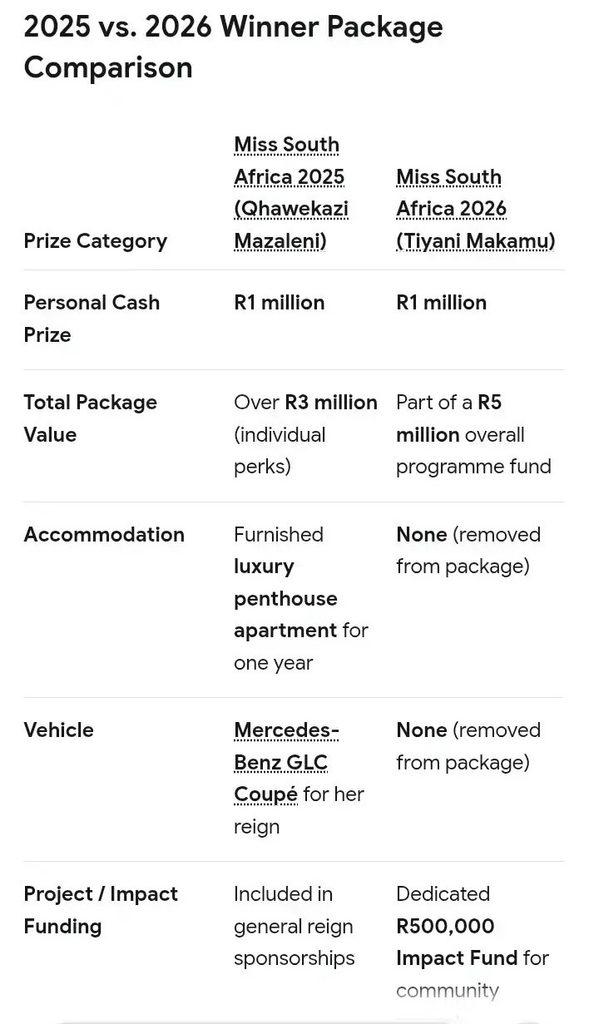
The latest debate erupting across social media stems from a widely circulated comparison between the reported winner packages of Miss South Africa 2025 and Miss South Africa 2026. While both winners reportedly receive the coveted R1 million cash prize, it is the apparent removal of several headline-making benefits that has left many pageant followers disappointed.
For years, South Africans became accustomed to Miss South Africa winners receiving packages that symbolised the magnitude of the achievement. Luxury apartments, premium vehicle sponsorships, fashion endorsements and a range of lifestyle opportunities elevated the title beyond a beauty pageant. Becoming Miss South Africa felt transformative, both personally and professionally.
The comparison currently making the rounds online tells a very different story.
According to the graphic, the 2025 titleholder received a furnished luxury penthouse apartment for the duration of the reign, a Mercedes-Benz GLC Coupé and a prize package valued at more than R3 million in additional benefits. By contrast, the 2026 package appears to have removed both the luxury residence and the vehicle sponsorship, replacing some of the benefits with structured programme funding and a dedicated impact fund.
While the shift may reflect a strategic move towards purpose-driven leadership and community impact, many South Africans are not seeing it that way.
On social media, the criticism has been swift and unforgiving.
One recurring sentiment is that the organisation appears to be moving away from the aspirational appeal that historically made the crown so desirable. Critics argue that Miss South Africa was never simply about beauty. It was about celebrating excellence while simultaneously rewarding the winner with opportunities that reflected the significance of the title.
For many observers, watching those luxury benefits disappear feels symbolic of a broader decline.
“How can one of the most prestigious pageants in Africa no longer offer a car?” asked one social media user. Others questioned how sponsors once eager to associate themselves with the brand seem less visible than in previous years.
The perception among some fans is that the pageant has gradually lost part of the magic that made it a national spectacle.
And Mzansi, as always, has not held back.
“The standards have dropped,” has become a common refrain across comment sections, with some suggesting that the winner package no longer reflects the level of commitment, public scrutiny and responsibility that accompanies the title.
Another criticism centres around prestige. Historically, Miss South Africa winners were viewed as national ambassadors, instantly gaining access to elite business circles, major sponsorships and lucrative opportunities. For critics, the reduction of luxury benefits sends the wrong message about the value attached to the crown.
Yet not everyone agrees.
Supporters of the pageant argue that modern pageantry is evolving. They believe impact, advocacy and social change should take precedence over luxury prizes. In their view, allocating resources toward community projects and leadership development represents progress rather than decline.
The debate ultimately reflects a deeper question facing beauty pageants worldwide: should the focus be on glamour and reward, or on purpose and impact?
For many South Africans, however, the answer lies somewhere in the middle.
They want substance and social impact, but they also want the prestige that once made winning Miss South Africa feel extraordinary. They want a queen who changes lives, but they also want a crown that still sparkles.
Whether the criticism is fair or not, one reality cannot be ignored: public perception matters. And right now, if social media conversations are anything to go by, many South Africans believe the Miss South Africa brand is facing one of its biggest image challenges in recent years.
The crown still carries history. The title still commands respect. But in the eyes of a growing number of critics, the question remains whether the rewards, the prestige and the excitement surrounding the competition are keeping pace with the legacy that built the Miss South Africa institution in the first place.
For now, the streets have delivered their verdict: the Miss South Africa organisation may still be producing impressive young leaders, but many South Africans are wondering whether the pageant’s golden era of glamour and grandeur is slowly becoming a thing of the past.